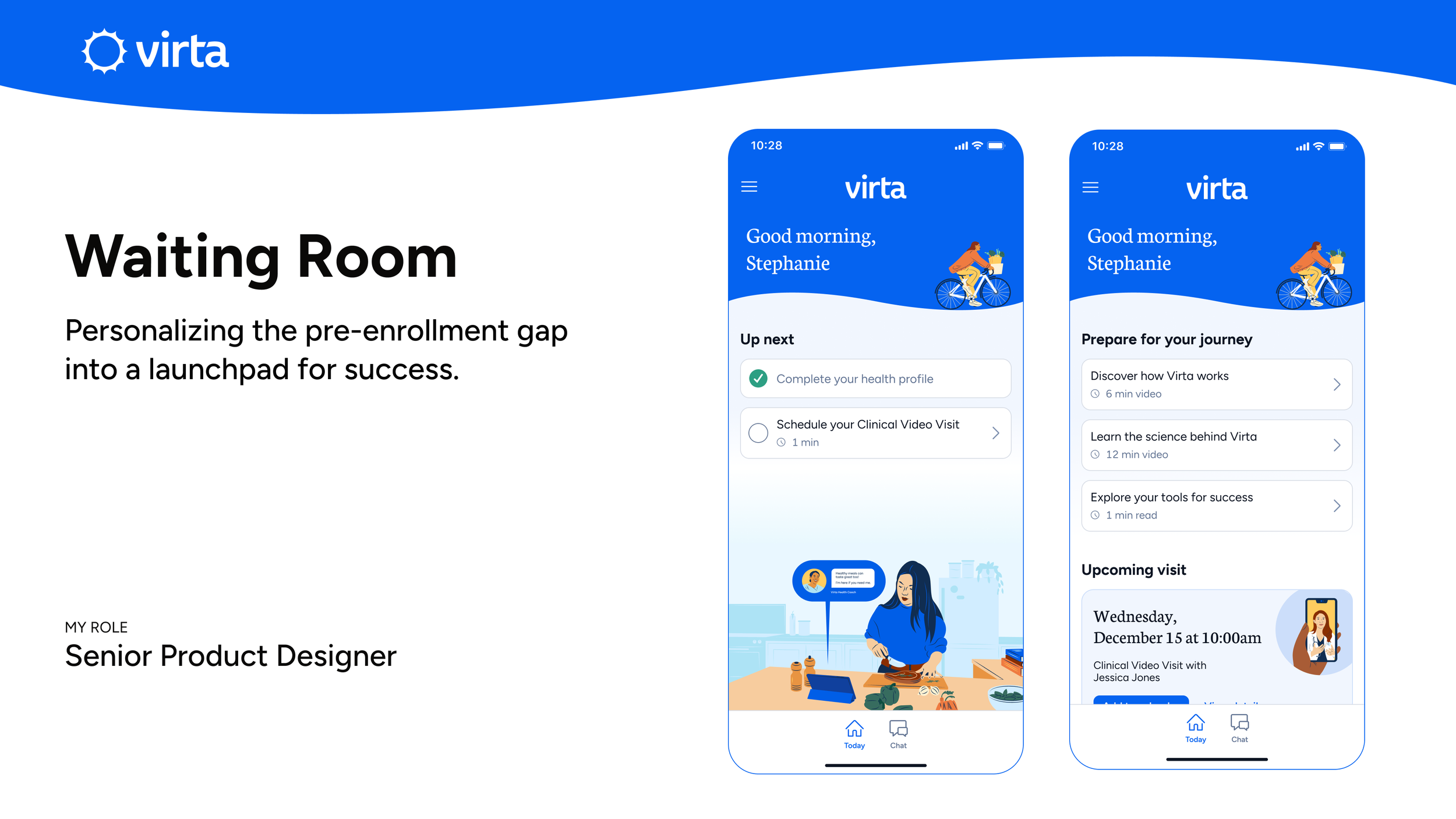
Led end-to-end redesign of Virta’s pre-enrollment experience — from research synthesis through shipped product — transforming an idle 14-day waiting period into a guided, trust-building journey with AI-powered personalization.
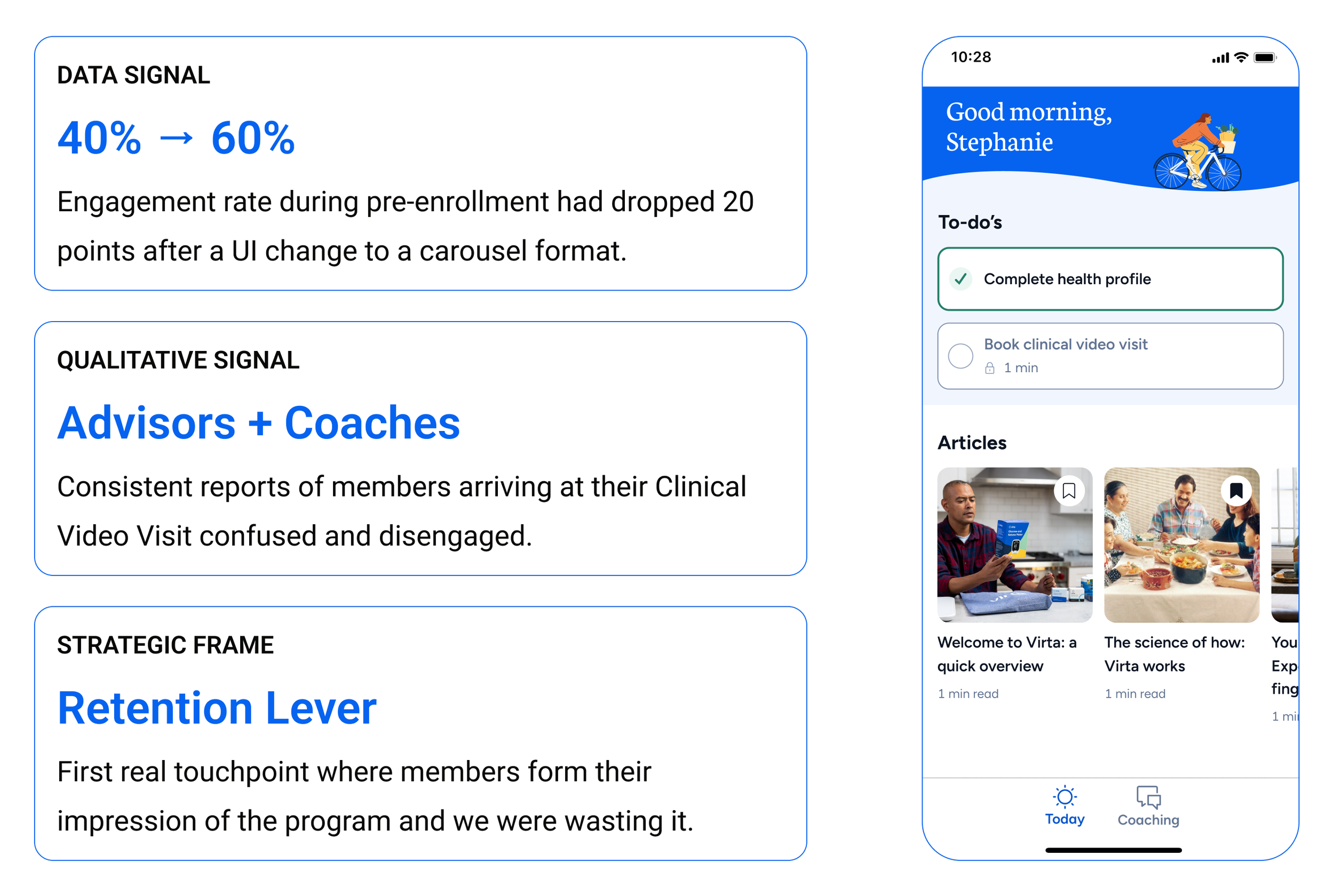
Engagement was sliding…
The decline showed up in the data, the advisor reports, and the coach check-ins. The signals were known; what was missing was a coherent design response. My role: lead the cross-functional direction that turned scattered concern into a shipped strategy.
What members, advisors, and the data were telling us
18 user interviews with current and prospective Virta members
42 advisor survey - enrollment advisors + health coaches
4 years internal cohort - engagement + dietary start data
3 competitive analyses - Whoop, Rootine, Lingo onboarding
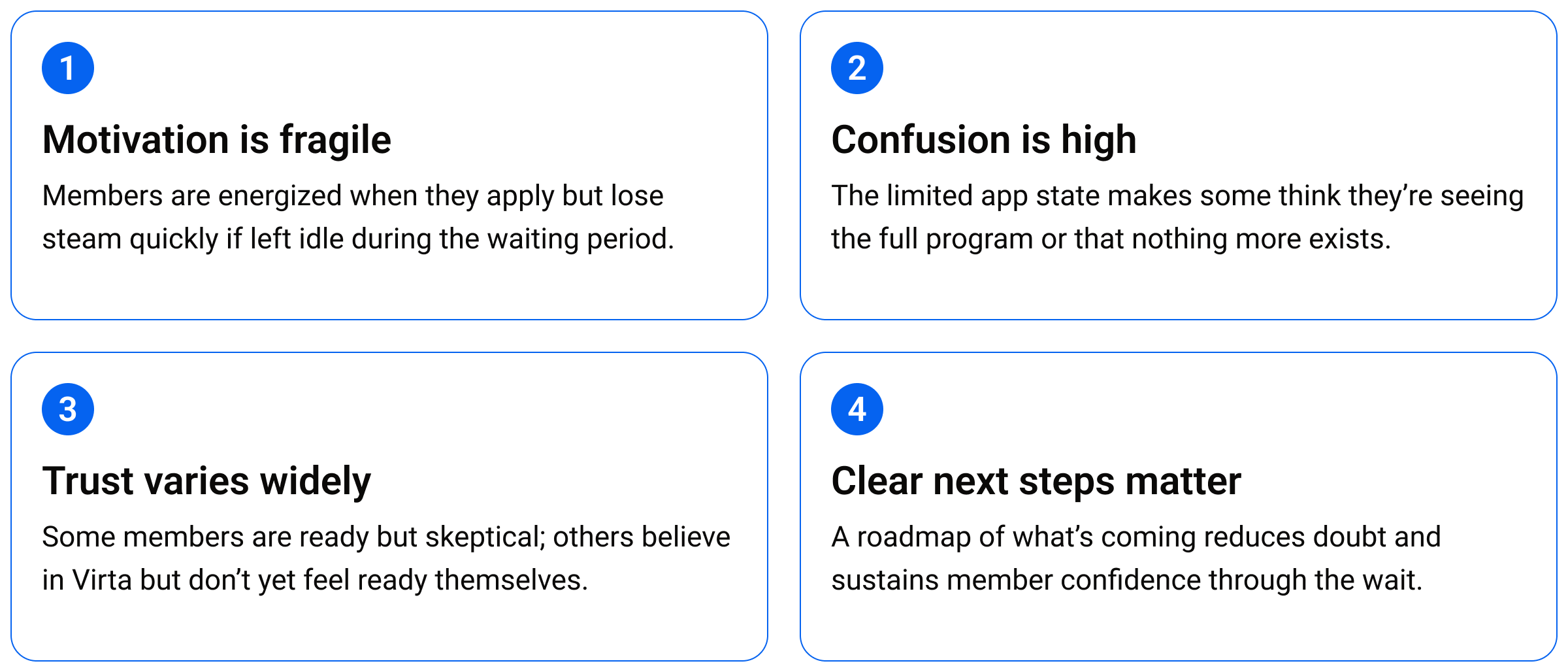
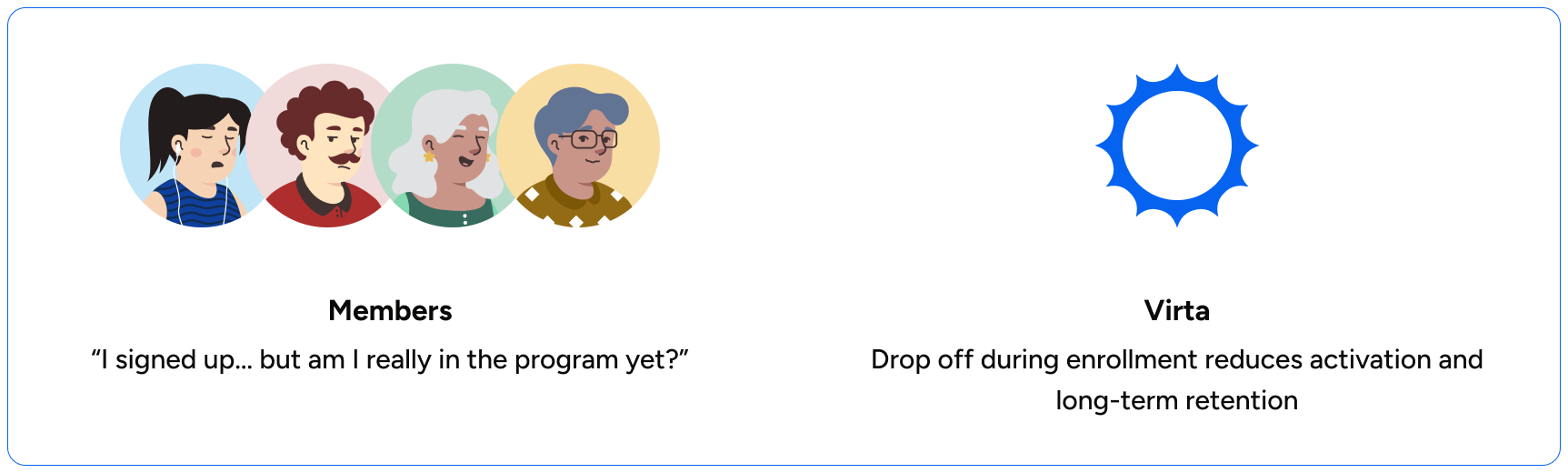
Members and Virta were both losing — for different reasons.
“How might we transform the
waiting room into an active, motivating experience that sets members up to succeed?”
Four strategic approaches to transform the waiting experience.
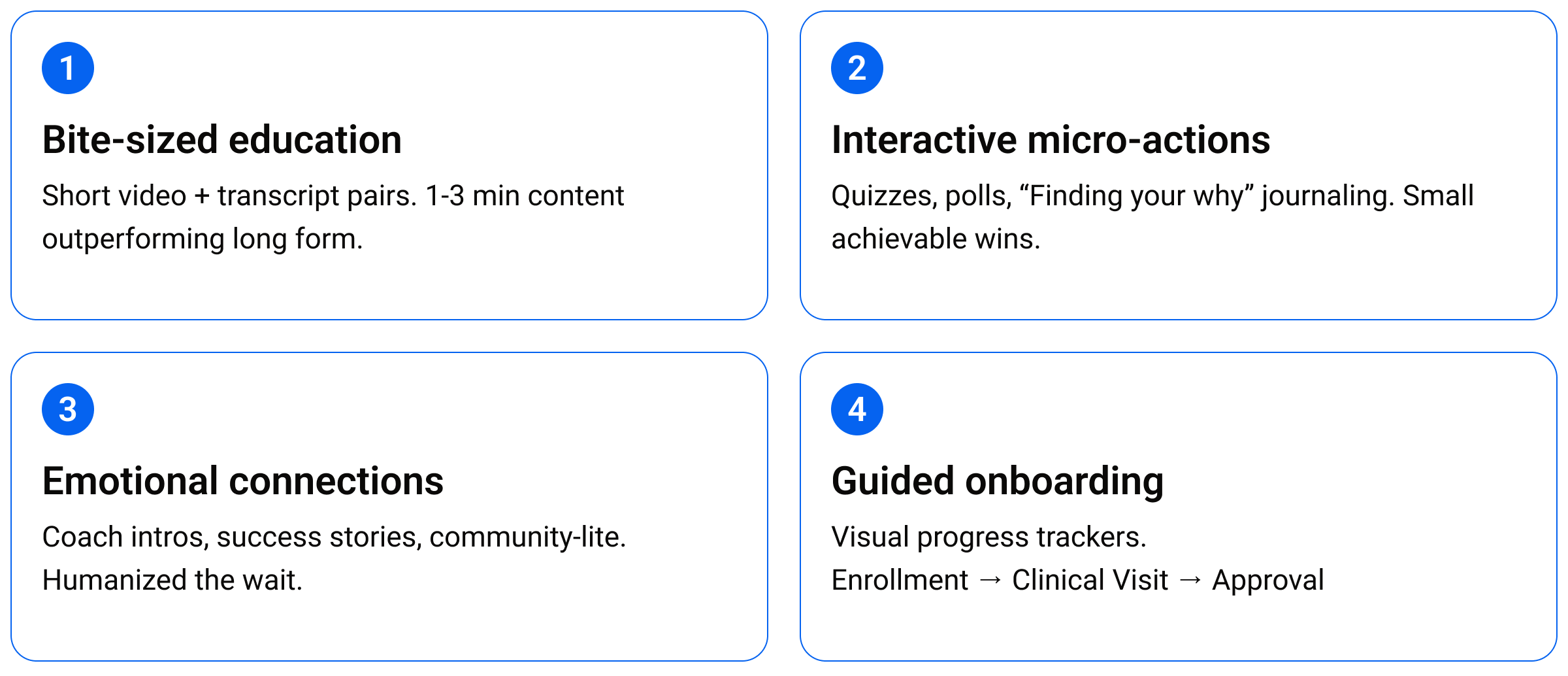
Bite-sized education
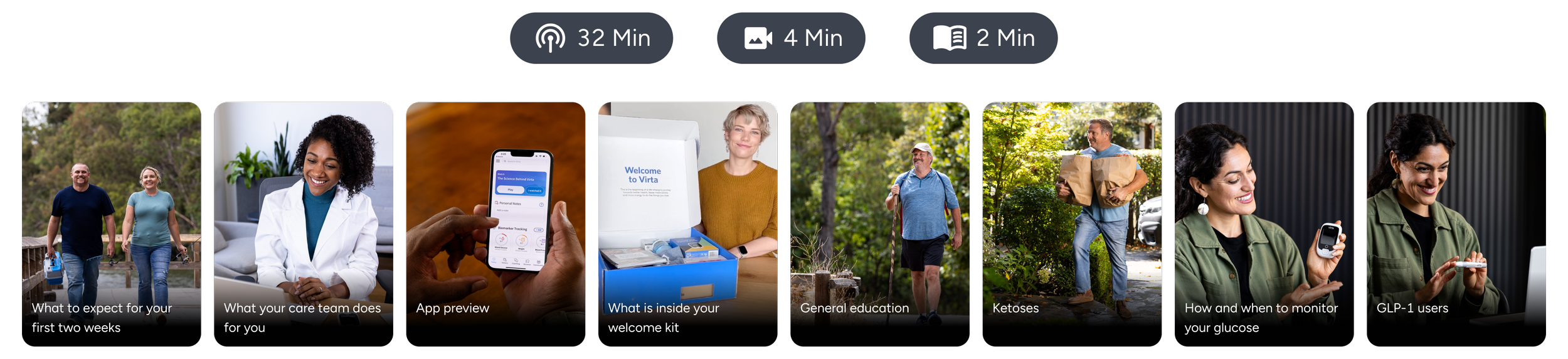
Stepwise lessons guide members from orientation through nutrition, tools, and different types of media — building confidence without overwhelm. Transcript + video pairing was widely appreciated. Shorter videos (1–3 min) had significantly better engagement than longer content.
Interactive micro-actions
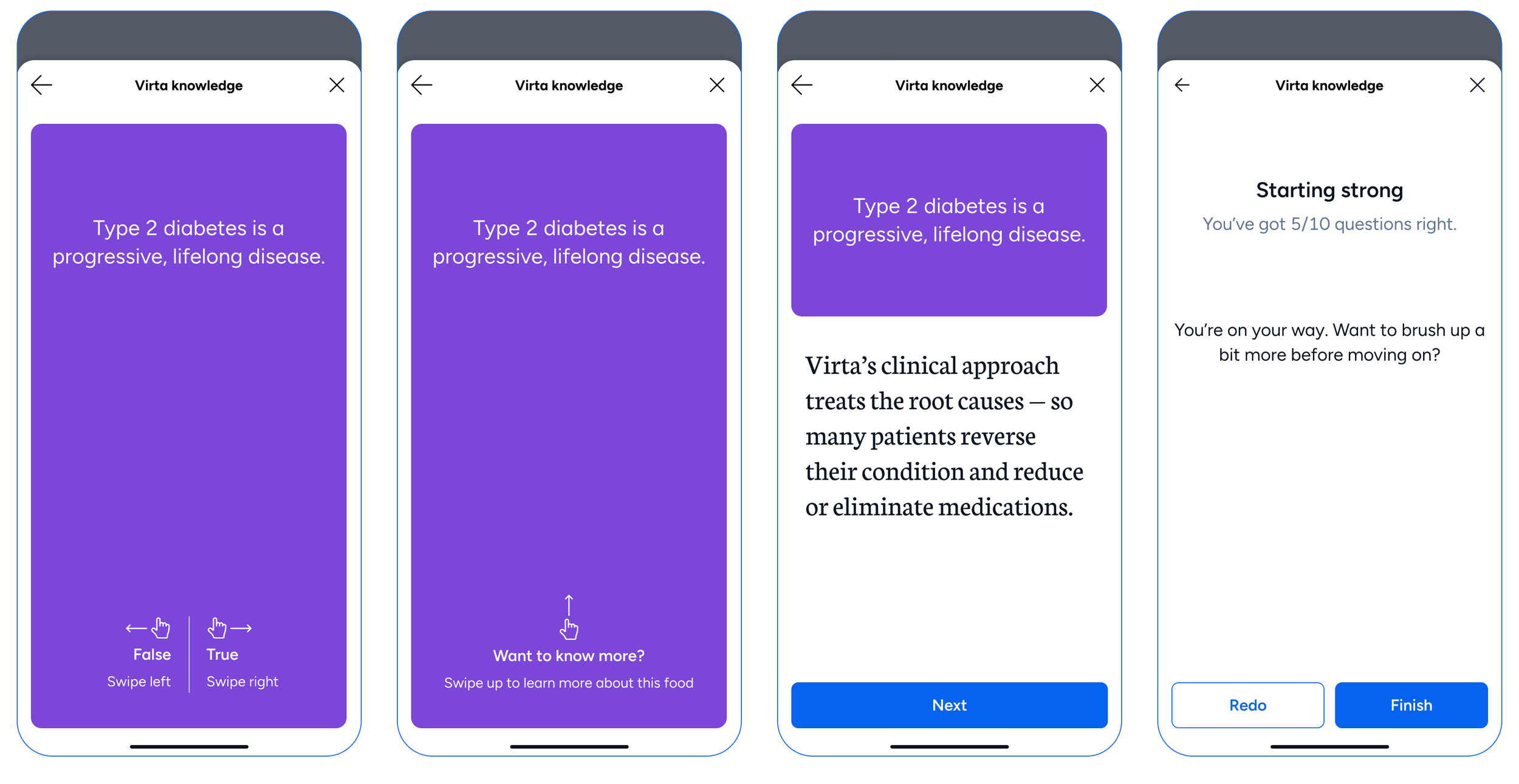
Quizzes, polls, and "Finding Your Why" journaling gave members small, achievable wins that created momentum and encouraged return visits. The "How do you like to be supported?" module tested especially well — testers said it made them feel seen as individuals.
Emotional connections
Made the wait feel like a preview, not a pause. Members saw the full tab bar of a future Virta experience — with each surface in preview, read-only, or locked state.
Coach video introductions, success-story reels, and community-lite features humanized the wait. By showing real people and what was coming, these touchpoints built trust, belonging, and the belief that “this program is for me.”
Guided onboarding
Visual progress trackers, milestone celebrations, and clear roadmaps made the journey transparent. The three-stage flow — Enrollment → Clinical visit → Approval — gave members a clear mental model of where they stood.
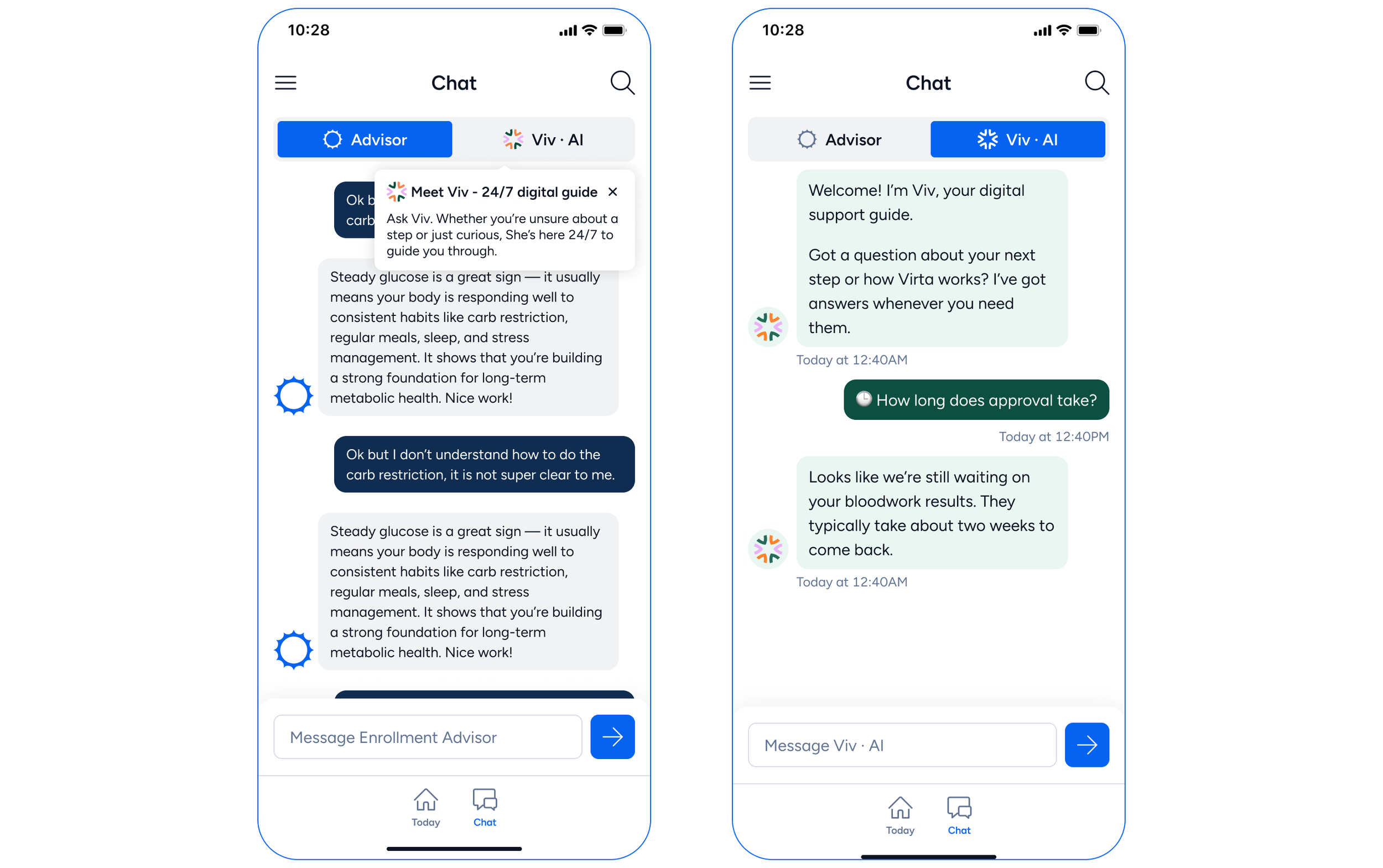
Viv — Virta's AI agent"
Proposed an AI assistant for the waiting-room context with tighter guardrails than a general chatbot. Viv handles logistics and encouragement; clinical questions and distress signals escalate to a human advisor.
✅ What landed
Transcript + video pairing — both visual and text options.
“How do you like to be supported?” — made members feel seen.
Realistic-expectations content — the most memorable element.
“Start while waiting” — reframed dead time as head start.
⚠️ What split the room: the quiz format
Some testers found it engaging; others felt tested or condescended to. “I like the idea” vs. “It feels like a test.” Skeptics felt it was a thinly-veiled ad. The format needs another round of iteration.
Scoping — Starting lean as a team
Prove the engagement hypothesis with a pattern we trusted — before investing in heavier ideas.
To-do list framing of articles — The Lean MVP
Rather than ship multiple heavy new patterns at once, the team chose to-do-list framing — a pattern with proven click-through over passive reading. “Do X this week” copy reliably outperforms “Read about X.” The plan: prove the engagement hypothesis with a known-working pattern first, then invest in additional ideation only after the data justified it.
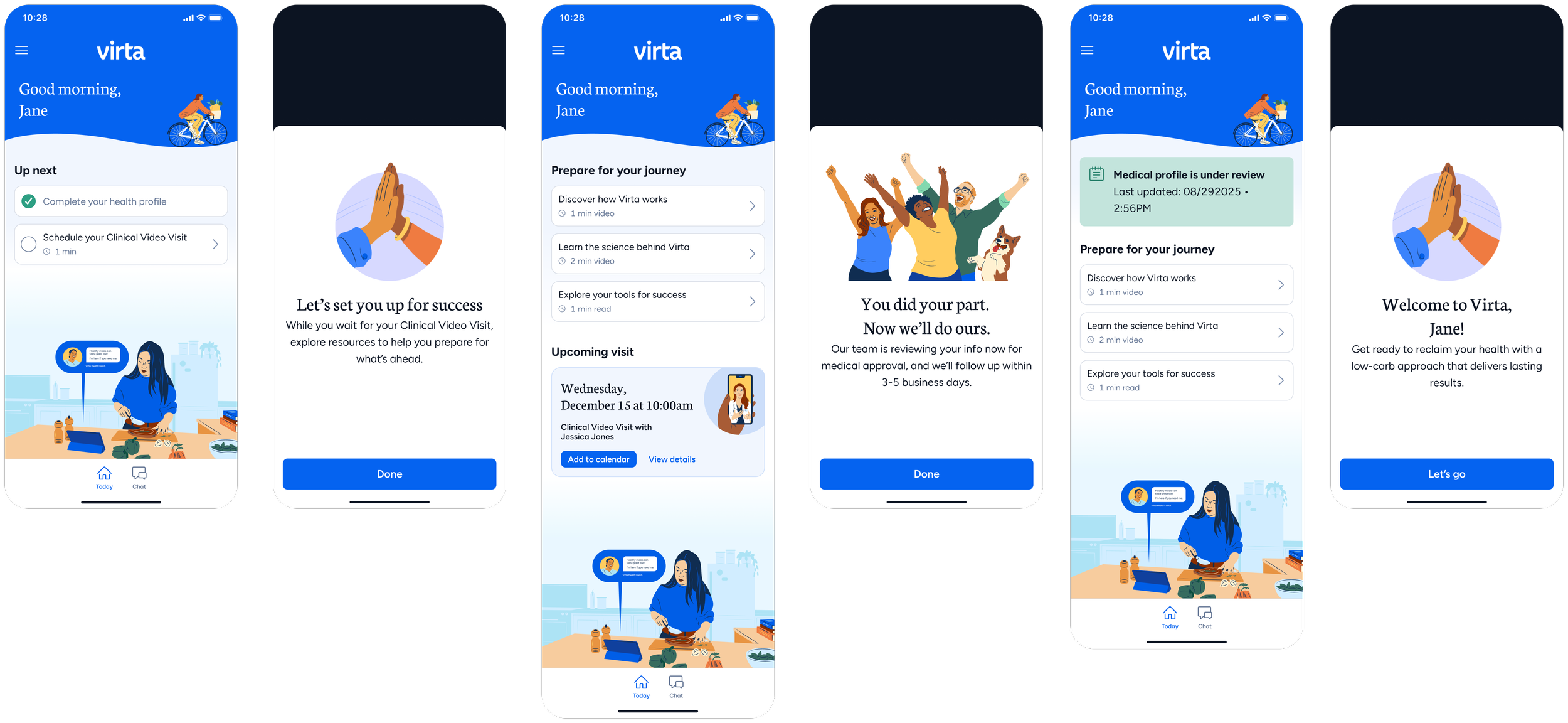
2x Pre-enrollment engagement
In the first 30 days post-launch, open rate doubled and to-do completion climbed to ~60%. The video + transcript pairing model we shipped became the template for all new onboarding content at Virta.

Next — Move segmentation into sign-up itself.
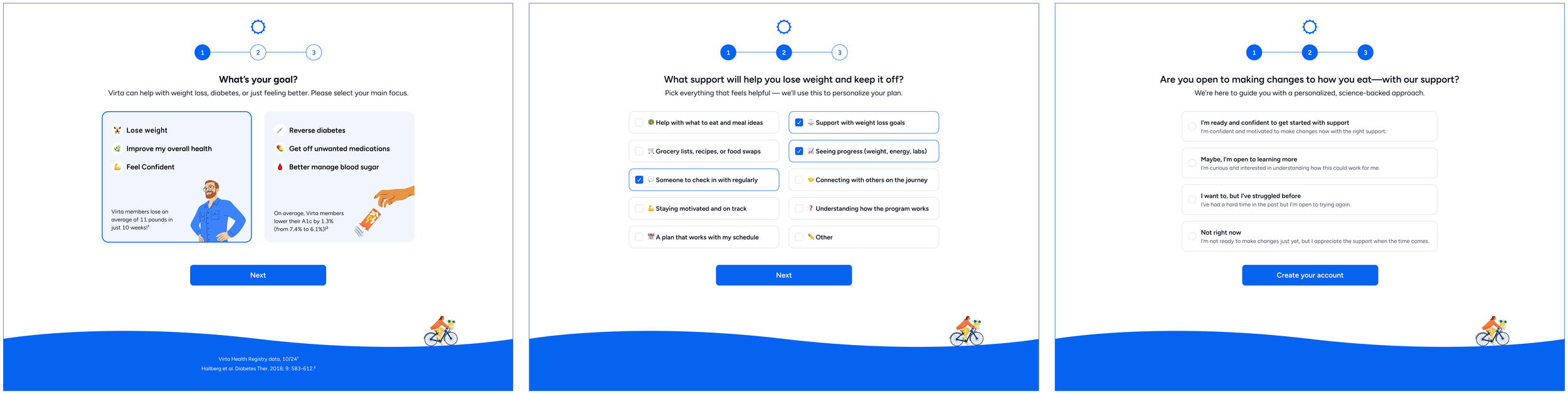
The waiting room currently personalizes against signals captured downstream — which means the first sessions are still relatively generic. Pushing mindset and readiness questions upstream into the sign-up flow would let the waiting room open already-tailored: proof-led content for skeptics, encouragement-first paths for the cautious, streamlined tools for the ready. Interactive micro-actions and emotional-connection content — coach intros, success-story reels — could be sequenced by segment from the first session, not the third. The earlier we know who someone is, the sooner the program feels like it's for them.